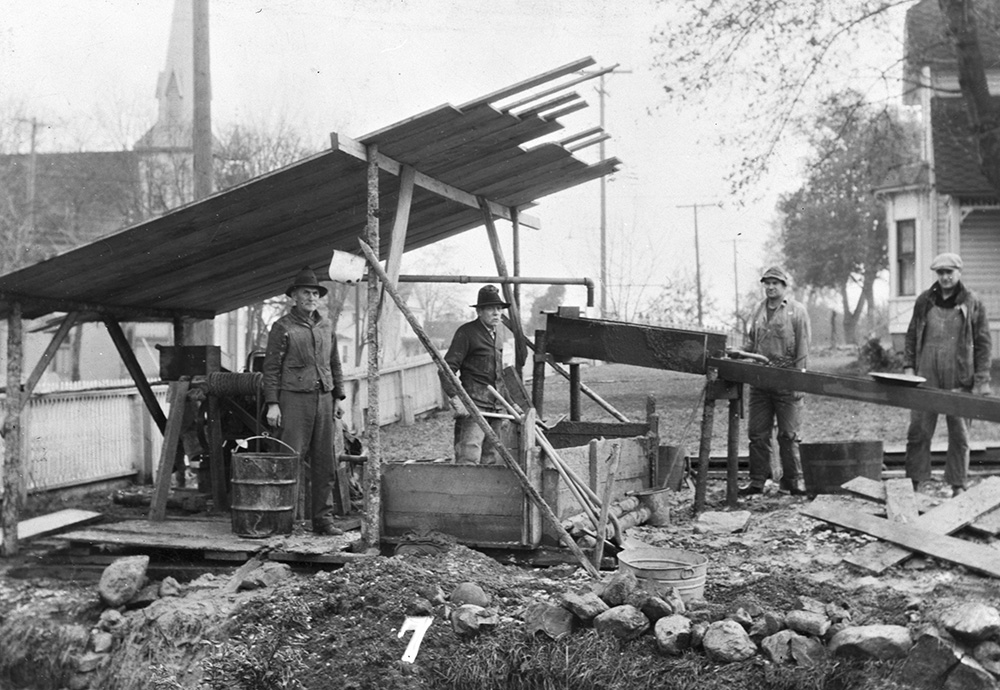
The Discovery of Gold
Jacksonville, Oregon was founded in the early 1850s after the discovery of gold in nearby Jackson Creek. The gold rush transformed the area into a bustling boomtown and one of the richest settlements in the Pacific Northwest.
A history worth preserving
As the gold dwindled, Jacksonville’s prominence faded, especially after the railroad bypassed the town in the 1880s. However, its well-preserved architecture and rich history remained intact, capturing the spirit of the Old West.
Today, Jacksonville is a National Historic Landmark known for its charming downtown, cultural events like the Britt Music Festival, and its role in Oregon’s early pioneer history.
Timeline of Jacksonville, Oregon: A living museum to explore and enjoy.
Pre-1850s – Native Homelands
Long before settlers arrived, the land that would become Jacksonville was inhabited by the Takelma people, whose presence in the Rogue Valley spanned thousands of years. They lived along the riverbanks, hunted game in the surrounding hills, and maintained a rich cultural tradition tied to the land.
1851 – The Spark: Gold Discovered in Jackson Creek
The discovery of placer gold in Jackson Creek by prospectors marked the beginning of the Southern Oregon Gold Rush. Within weeks, hundreds of miners flooded into the region. Makeshift tents and wooden structures sprang up, forming the boomtown that would become Jacksonville.
1852 – A Town is Born
Named in honor of President Andrew Jackson, Jacksonville quickly became one of Oregon’s largest and wealthiest settlements. It attracted miners, gamblers, merchants, lawyers, and outlaws, giving the town a gritty, lively frontier atmosphere.
1853 – Jackson County Formed
As the population exploded, Jackson County was officially established, with Jacksonville as its seat. The town became a major legal and commercial center, known for its brick courthouses, saloons, and brothels.
1850s–1860s – Boom Years and Growing Pains
Jacksonville reached its peak in the late 1850s. It had multiple newspapers, schools, a hospital, and a racially diverse population including Chinese miners and freed Black settlers. However, racial tensions and discriminatory laws also emerged, reflecting broader challenges of the time.
1858 – The Beekman Bank is Established
Founded by Cornelius C. Beekman, this became one of the oldest banks in the Pacific Northwest. It still stands today as a historic museum and example of frontier finance.
1861 – Great Fire of Jacksonville
A devastating fire burned large sections of the downtown business district, which were later rebuilt using more permanent brick, many of which still stand and define the town’s iconic architectural style.
1870s – Decline of Gold, Rise of Agriculture
As the gold veins began to run dry, Jacksonville gradually transitioned toward a more stable, agriculture-based economy. Orchards and vineyards started replacing tailings and tent camps.
1884 – Railroad Chooses Medford
A pivotal moment: the new Oregon and California Railroad bypassed Jacksonville in favor of flat, open land to the east. This shifted the region’s economic future toward Medford, which rapidly grew while Jacksonville’s fortunes waned.
1890s–1920s – Quiet Decay and Preservation
While Medford surged ahead, Jacksonville remained relatively unchanged. This economic slowdown ironically helped preserve the town’s historic buildings, which would later become its greatest asset.
1927 – Loss of County Seat
After decades of competition, Jacksonville formally lost the Jackson County seat to Medford. This marked the end of its political significance—but laid the groundwork for its cultural preservation.
1930s–1950s – Ghost Town in the Making
During the Great Depression and postwar era, Jacksonville slipped into obscurity. Locals joked it was becoming a ghost town, but this period of inactivity also meant that almost no modern buildings replaced the old ones.
1966 – Jacksonville Becomes a National Historic Landmark
Recognizing its pristine frontier-era architecture, the entire downtown district was placed on the National Register of Historic Places—one of the first towns in the U.S. to receive such designation.
1963–Present – The Britt Festival and Cultural Renaissance
The creation of the Britt Music & Arts Festival, held in a beautiful open-air amphitheater, began Jacksonville’s transformation into a cultural and tourism destination. World-class musicians now perform each summer under the Southern Oregon stars.
2000s–Present – Conservation, Fire Resilience, and Heritage Tourism
Jacksonville sits at the edge of the wildland-urban interface and plays a key role in regional fire mitigation, prescribed burning, and defensible space programs.
It has also become a gateway to Southern Oregon’s Applegate wine region, with strong ties to nearby conservation corridors and public lands. The town thrives today as a blend of living history, small-town charm, and forward-thinking stewardship.
 Discover Jacksonville Gold